
In a bad start to the new year, hotels are counting their losses again. Weddings and corporate events for this month have either been called off or postponed. The blow has throttled the nascent recovery which had kicked in around August. It is primarily hurting the banquet-driven hotel chains, some of which are seeing cancellations running into lakhs for a single day.

With Covid-19 cases across the country rising rapidly once again, demand for health insurance products has spiked. Insurers are seeing an uptick in inquiries for such products and underwriting more premiums in the segment. Already, health insurance was growing at a rapid pace since the onset of the pandemic as awareness around risk had heightened among consumers. But the country recorded more than 600,000 Covid-19 cases in the past week, which is almost a six-fold rise than the previous week. Owing to this, the spike in demand for health insurance products is inevitable, experts said.

2.75 million of the 3 million Covid-related health claims were settled.

On the itinerary: Luxury camping, tribal homestays, heritage cities.
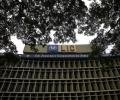
At a closed-door meeting with global investors, the largest asset manager in the country boasted of its nearly Rs 37 trillion assets under management (AUM) - 16.6 times that managed by the second-largest insurer SBI Life. The numbers are as of March 31, 2021. The assets of LIC are 1.2 times the net assets of the entire Indian mutual fund industry, which had AUM of Rs 31.43 trillion as of March 31, 2021 (about Rs 37.3 trillion until November this year). The standalone assets that LIC manages are equal to 18.7 per cent of India's GDP and worth more than gross domestic product (GDP) of the UAE, Bangladesh, Malaysia, Singapore, Hong Kong, South Africa, New Zealand, and Pakistan.
They straddle many different (non-financial) lines of business with sometimes opaque overarching governance structures.

'Some of the launches may get deferred due to the semiconductor shortage, which is unlikely to get resolved before the second half of 2022.'

'The ship has been stabilised.' 'For the last 6-7 quarters, profitability is stable around Rs 250-Rs 300 crore.'

Passenger Vehicle makers are likely to see their cumulative earnings at an operating level erode by Rs 1,800-2,000 crore in the year ending March 2022 on account of the shortage of semiconductors, rating agency Icra said at a webinar on Wednesday. The industry, it pointed out, is estimated to lose production of 500,000 units at the end of FY22 due to the chronovc shortage the chip, which is critical in safety, entertainment and the various other smart features of a car. "In absence of the chip crisis, the industry volumes are likely to have exceeded the all-time peak annual volumes." Icra has pared its growth estimates for the PV market from the earlier 10-14 per cent to 8-11 per cent now in FY22.

India's electric mobility goal, which has so far been riding on two wheels, is all set to graduate to four wheels. At least, the journey has begun. Hyundai Motor India said it would invest Rs 4,000 crore till 2028 to launch half-a-dozen electric vehicles (EVs) in India. It would eventually straddle premium and mass segments. The first of these - the electrified version of an internal combustion engine (ICE)-powered model - will go on sale as early as next year.

'We are not organising any large celebrations on New Year's Eve to avoid last-minute changes in guidelines.'

'Bharat has been leading, but it cannot carry India as the bulk of the sales come from India in terms of volume and profitability.'

For every one experienced candidate being recruited by e-two wheeler companies, 10 have no prior experience; recruitments are for skilled, low-end jobs, not for managerial or supervisory roles.

Life insurers' new business premium (NBP) reported stellar performance in November after a poor showing in October, on the back of strong growth in group single premiums for both private insurers and Life Insurance Corporation (LIC) of India. In November, 24 life insurers, including LIC, reported NBP to the tune of Rs 27,177 crore, up 42 per cent year-on-year (YoY) from the year-ago period. Private insurers' NBP rose 58.63 per cent YoY to Rs 11,209.75 crore as group single premiums more than doubled during this period.

Life insurers, on the prodding of global reinsurers, are set to hike premiums on term plans because rising mortality after the second wave of the pandemic has led to an increase in the number of settlements. Some will do so next month while others may wait till January. Global reinsurer Munich Re had nudged its insurance partners on the hike in September and insurers have been engaged in negotiations with the reinsurer on the amount of the increase. Term plan prices in India were among the lowest in the world for a long period but in the past couple of years, they have been increased a few times.

Tata Motors, India's third largest passenger vehicle maker, took pole position in the competitive sport utility vehicle (SUV) market in October, reveals the data from industry sources. Riding high on the Punch - the sub-compact SUV offering launched on October 18 - the Tata group flagship sold a record 23,381 units in October, higher than 20,022 units sold by archrival Mahindra & Mahindra, 18,538 units sold by Hyundai Motor India, and 15,931 units sold by Kia Motors India. Utility vehicles - that include SUVs and multipurpose vehicles - accounted for almost one in every two passenger vehicles sold in India in the first seven months of the current financial year, according to the Society of Indian Automobile Manufacturers.

'Last year (FY21), we had about 1 million intimated claims for Covid.' 'This year (FY22), in six months, we got about 1.6 million claims.'

Rapid strides in digital payments notwithstanding, the Indian economy will likely remain cash-dependent for many years to come, at least that's what the automated teller machine makers and cash logistics companies are betting on. After growing at over 20 per cent for most of 2020, currency in circulation growth fell to 8.5 per cent as of October 29 this year, shows data from the Reserve Bank of India (RBI). The reason for the steep rise in currency last year was the uncertainties related to the Coronavirus (Covid-19) pandemic, where people preferred to hoard cash to meet exigencies.

'There will be partnerships between banks and fintech firms, but there will also be areas where they will be direct competitors.'

Even as the semiconductor shortage has limited the demand for new cars, the pre-owned car segment is seeing a surge. A preference for personal mobility, availability of multiple organised online platforms, including e-commerce channels, aggregators, and classifieds, have been fuelling growth. The growth rate of the pre-owned car market is expected to be 1.5x that of the new car market over the next five years.
 © 2026 Rediff.com - Advertise with us - Disclaimer - Privacy Policy - Sitemap - Feedback - About us - Terms of use - Grievances